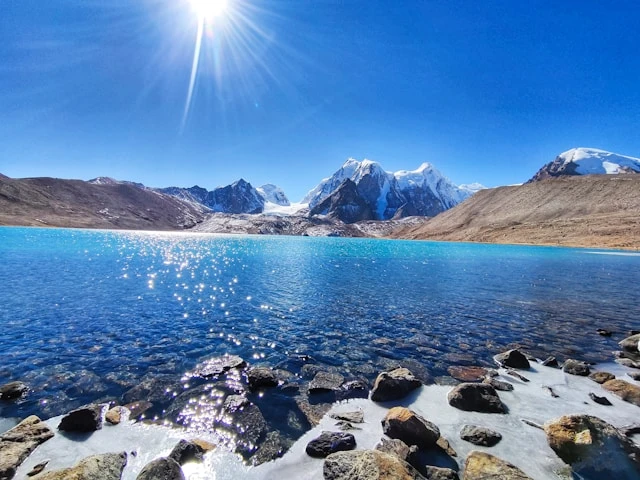
Hidden deep within the mystical landscapes of North Sikkim, Gurudongmar Lake is one of the highest and most awe-inspiring lakes in the world. Resting at an extraordinary altitude of 17,800 feet, close to the Indo-China border, this sacred water body is revered not only for its surreal beauty but also for its profound spiritual importance.
Encircled by towering snow-covered mountains and rooted in centuries-old legends, Gurudongmar Lake captivates visitors with its striking turquoise waters. One of its most fascinating features is that a portion of the lake remains unfrozen even during extreme winter conditions, a phenomenon believed to be the result of divine blessings. Whether you are drawn by faith, adventure, or the sheer magnificence of the Himalayas, a visit to Gurudongmar Lake is a truly unforgettable experience.
Gurudongmar Lake holds a unique place in the cultural and spiritual fabric of the region. It is revered by Hindus, Sikhs, and Buddhists, and is believed to have been blessed by Guru Padmasambhava in the 8th century. The lake’s tranquil yet powerful presence reflects the harmony between nature, mythology, and faith.
The pristine waters of Gurudongmar are believed to hold sacred powers. According to local belief, consuming water from the lake can help overcome fertility-related challenges. Though not supported by scientific evidence, this faith draws countless devotees to the small temple near the lake. Prayer flags flutter against the stark Himalayan backdrop, creating a deeply spiritual atmosphere and earning Gurudongmar its reputation as a “wish-fulfilling lake.”
Beyond its spiritual aura, Gurudongmar Lake plays a crucial geographical role. It is the primary source of the Teesta River, one of the lifelines of Sikkim and West Bengal. The glacier-fed waters flow into Tso Lahmu Lake before forming the Teesta, which nourishes valleys far below. While the surrounding mountains may make the lake appear modest in size, its significance runs far deeper, both literally and symbolically.
Standing at the lake’s edge, visitors are treated to mesmerising views of snow-draped peaks reflected in turquoise waters. The high-altitude silence is occasionally broken by the sight of grazing yaks or blue sheep, enhancing the otherworldly charm of the region. The stark terrain, combined with shimmering ice and sky, creates an unforgettable visual experience.
Altitude: Located at 17,800 ft (5,430 m), making it one of the highest lakes on Earth
Location: North Sikkim, near the Indo-China border
Spiritual Significance: Considered sacred by Hindus, Sikhs, and Buddhists
Historical Belief: Associated with Guru Padmasambhava, who is believed to have blessed the lake
Frozen Landscape: The lake remains frozen for most of the year, except for one sacred section
Natural Beauty: Displays vivid turquoise-blue waters with crystal-clear reflections when unfrozen
Permit Requirement: Indian nationals require special permits; foreign tourists are not allowed beyond Lachen
High Altitude Conditions: Low oxygen levels may cause altitude sickness
Accommodation: No stay facilities near the lake; the nearest lodging is in Lachen, approximately 65 km away
Best Time to Visit Gurudongmar Lake
Though Gurudongmar Lake can be visited throughout the year, selecting the right season greatly enhances the experience. The best time to visit is between March and June, when weather conditions are relatively stable. During this period, temperatures range from 5°C to -5°C, and the lake reveals its mesmerising blue hues framed by snow-capped peaks, alpine flowers, and rolling mountain terrain.
Another favourable time is October to November, when clear skies, crisp air, and excellent visibility create perfect conditions for sightseeing and photography. These months offer some of the most dramatic views of the Himalayan ranges.
During the winter season (October to March), Gurudongmar transforms into a frozen wonderland. While most of the lake remains covered in ice, a small portion stays unfrozen, reinforcing its mystical reputation. However, extreme cold and heavy snowfall can make travel challenging.
For the most comfortable and rewarding visit, late spring and early autumn are ideal. Trips usually start early in the morning due to weather patterns and road conditions. Proper acclimatisation is essential, and travellers must carry adequate winter clothing, as temperatures can drop suddenly even during warmer months.
 Manali
 Kerala
 Kashmir
 Spiti Valley
 Dharamshala
 Shimla
 Ladakh
 Bir Billing
 Dalhousie
 Kasol
Kasol
 Tirthan & Jibhi
 Meghalaya
 Tawang
 Uttrakhand
 Sikkim
 Bhutan