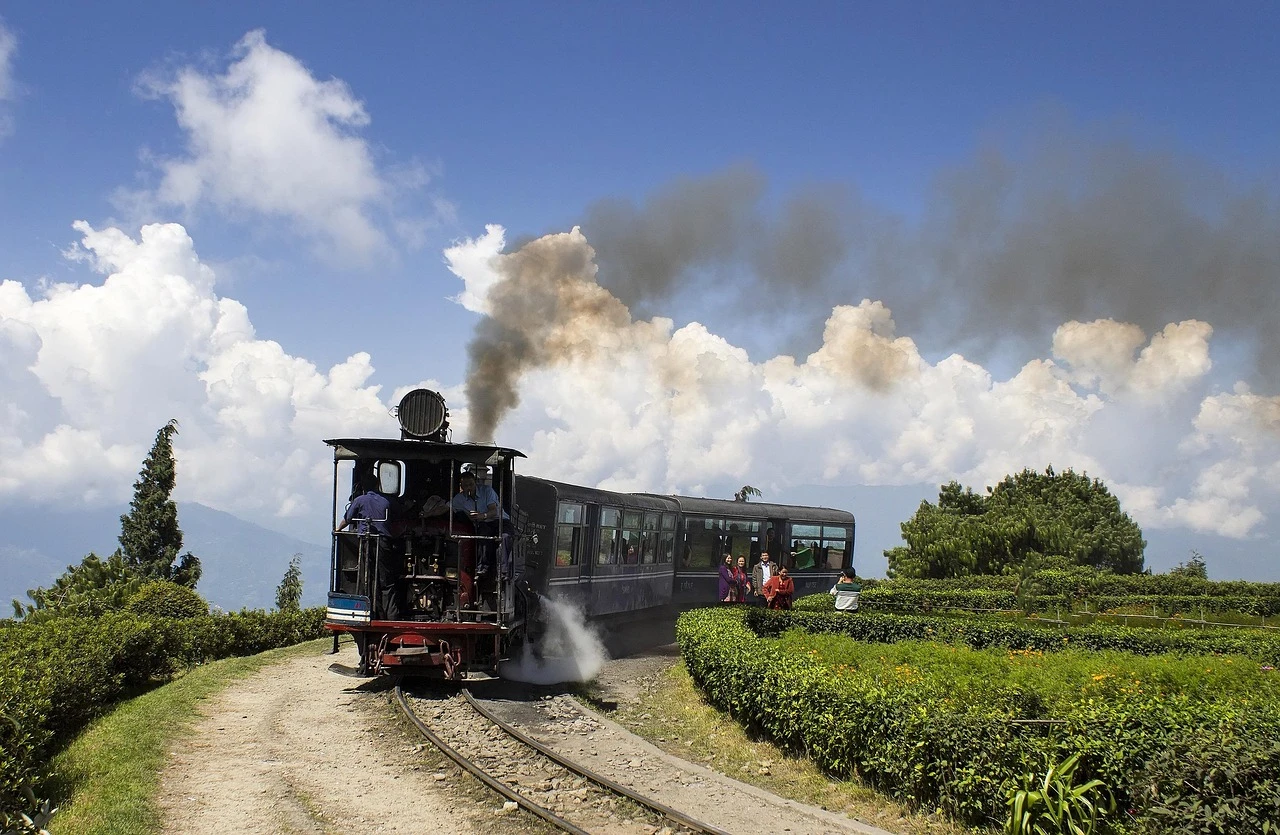
Imagine holding a warm cup of world-famous Darjeeling Tea, gently chugging along on the historic Toy Train, while the mighty Kanchenjunga rises majestically against the Himalayan skyline. Few places offer relaxation and romance like Darjeeling. Nestled amid rolling tea gardens in West Bengal, this charming hill town blends colonial elegance with Tibetan spirituality, misty mountains, and age-old traditions. Darjeeling invites travellers to experience a harmonious mix of nature, culture, heritage railways, and unforgettable flavours.
Before 1835, Darjeeling formed part of the Kingdom of Sikkim. Recognising its cool climate and potential as a hill sanatorium, the British Governor-General sought control of the region. In a symbolic gesture of goodwill, the Raja of Sikkim presented Darjeeling to the East India Company, receiving gifts such as firearms, cloth, and shawls in return. Under British rule, Darjeeling evolved into the summer capital of the Bengal Presidency, leaving behind a legacy of colonial architecture and institutions.
Post-Independence, Darjeeling flourished further and earned the title “Queen of the Hills.” The town also became home to a large Tibetan refugee community after the 1959 Tibetan uprising, enriching its cultural and spiritual landscape.
One of Darjeeling’s most iconic attractions is the Darjeeling Himalayan Railway, fondly known as the Toy Train and recognised as a UNESCO World Heritage Site. Each journey offers postcard-perfect views and old-world charm. Renowned writer Mark Twain, who rode the train in 1895, famously described it as one of the most exhilarating days of his life, filled with wonder, thrill, and joy.
A visit to Happy Valley Tea Estate, established in 1854, reveals the heritage of Darjeeling tea cultivation. Guided estate tours and tasting sessions allow visitors to savour some of the finest teas in the world.
Darjeeling is also rich in spiritual and cultural experiences. The Tibetan Refugee Self-Help Centre showcases exceptional Tibetan craftsmanship, while the serene Bhutia Busty Monastery offers moments of peace and reflection. The Himalayan Mountaineering Institute celebrates the region’s mountaineering legacy and inspires adventure enthusiasts.
History lovers can explore the Netaji Subhas Chandra Bose Museum, once his residence during house arrest. The Batasia Loop & Gorkha War Memorial combine scenic beauty with patriotic pride. Other notable landmarks include Coronation Bridge, DhirDham Temple, St. Andrew’s Church, the Japanese Temple & Peace Pagoda, and the Padmaja Naidu Himalayan Zoological Park, home to rare species such as red pandas, snow leopards, and Siberian tigers.
Darjeeling remains lively all year with vibrant festivals reflecting its multicultural identity. The Teesta Tea & Tourism Festival and Darjeeling Carnival in November celebrate tea heritage, music, art, and local cuisine. December brings the Darjeeling Orange Festival, followed by colourful New Year celebrations featuring Lepcha and Bhutia traditions.
Spring welcomes Losar (Tibetan New Year), Chaita Dasai, and Buddha Jayanti, each filling the town with rituals, prayers, processions, and cultural performances that offer visitors a deeper cultural connection.
Darjeeling is as much about experiences as it is about landscapes. Tea estate visits and tastings are a must, and carrying home premium Darjeeling tea ensures lasting memories.
The iconic Khukuri, symbol of Gorkha bravery, makes for a meaningful souvenir. Tibetan handicrafts, Thangka paintings, prayer wheels, copper artefacts, woollens, and wooden décor reflect the region’s artistic heritage and are widely available in local markets.
Darjeeling’s markets are a delight for shoppers. From Mall Road and Chowk Bazaar to Hong Kong Market, Batasia Loop Market, and Teesta Market, visitors can browse handicrafts, woollens, Tibetan artefacts, and everyday local life. The presence of the Toy Train line near Batasia adds charm to the shopping experience.
Darjeeling’s cuisine reflects its cultural diversity. Relish traditional delights like Sel Roti, warming Tibetan butter tea, and local brews such as Chang and Thomba. Popular dishes include Momos, Sha Phaley, and Thukpa, offering comfort and flavour in the cool mountain climate.
Adventure seekers can enjoy ropeway rides, rock climbing, river rafting on the Teesta, and thrilling treks across the Singalila Ridge. Popular treks lead to Tonglu, Gorkhey, Sandakphu, Kamala Falls, and Rohini, offering panoramic views of Kanchenjunga and even Mount Everest. Wildlife lovers can explore forested areas like Bamunpukhuri Jungle for a glimpse of the untouched Himalayan wilderness.
Tiger Hill: Famous for sunrise views over Kanchenjunga and distant Mount Everest
Observatory Hill: A sacred site with Hindu and Buddhist shrines
Kurseong: A serene hill town known for orchids, heritage schools, and panoramic views
Lloyd Botanical Garden: Spread across 40 acres, showcasing rare Himalayan and exotic plant species
From snow-clad peaks and emerald tea gardens to spiritual sanctuaries and adventure trails, Darjeeling offers an experience that goes far beyond sightseeing. It is a destination where history, culture, nature, and adventure come together to create memories that linger long after the journey ends.
Popularly known as the “Queen of the Hills,” Darjeeling is a picturesque hill town and district headquarters in the eastern Indian state of West Bengal. Perched at an altitude of around 2,042 metres (6,700 feet) in the Lesser Himalayas, Darjeeling is globally celebrated for its premium tea gardens, sweeping views of Mount Kanchenjunga, the world’s third-highest peak, and the iconic Darjeeling Himalayan Railway, a UNESCO World Heritage Site.
The Darjeeling district is divided into four subdivisions: Darjeeling Sadar, Kurseong, Mirik, and Siliguri. While Darjeeling Sadar, Kurseong, and Mirik are located in the hills, Siliguri lies in the plains at an elevation of about 400 metres and serves as the main gateway to the region. (Kalimpong was earlier part of the Darjeeling district but became a separate district in February 2017.)
The nearest airport to Darjeeling is Bagdogra Airport, located approximately 90 km away. It is well-connected with regular flights from major Indian cities such as Kolkata, Delhi, and Guwahati. From Bagdogra Airport, travellers can hire private or shared taxis to reach Darjeeling via scenic mountain roads.
Darjeeling is accessible by rail through nearby stations at New Jalpaiguri (NJP) and Siliguri, both of which have excellent connectivity with major cities, including Kolkata, Delhi, Guwahati, and Mumbai.
The charming Darjeeling Himalayan Railway, starting from New Jalpaiguri and Siliguri, offers a unique and nostalgic journey to Darjeeling through the hills, making the train ride an experience in itself.
Darjeeling is well connected by road, primarily via Siliguri, which is around 77 km away. Siliguri is linked to major cities across India through national highways.
Regular bus services operate from Tenzing Norgay Bus Terminus in Siliguri. In addition, travellers can choose from private taxis, shared jeeps, and pre-paid taxi services available at Bagdogra Airport and New Jalpaiguri Railway Station.
There are four scenic road routes from Siliguri to Darjeeling, each offering beautiful mountain views:
Tindharia – Kurseong Route
Dudhiya – Mirik Route
Rohini Road
Pankhabari Route
 Manali
 Kerala
 Kashmir
 Spiti Valley
 Dharamshala
 Shimla
 Ladakh
 Bir Billing
 Dalhousie
 Kasol
Kasol
 Tirthan & Jibhi
 Meghalaya
 Tawang
 Uttrakhand
 Sikkim
 Bhutan