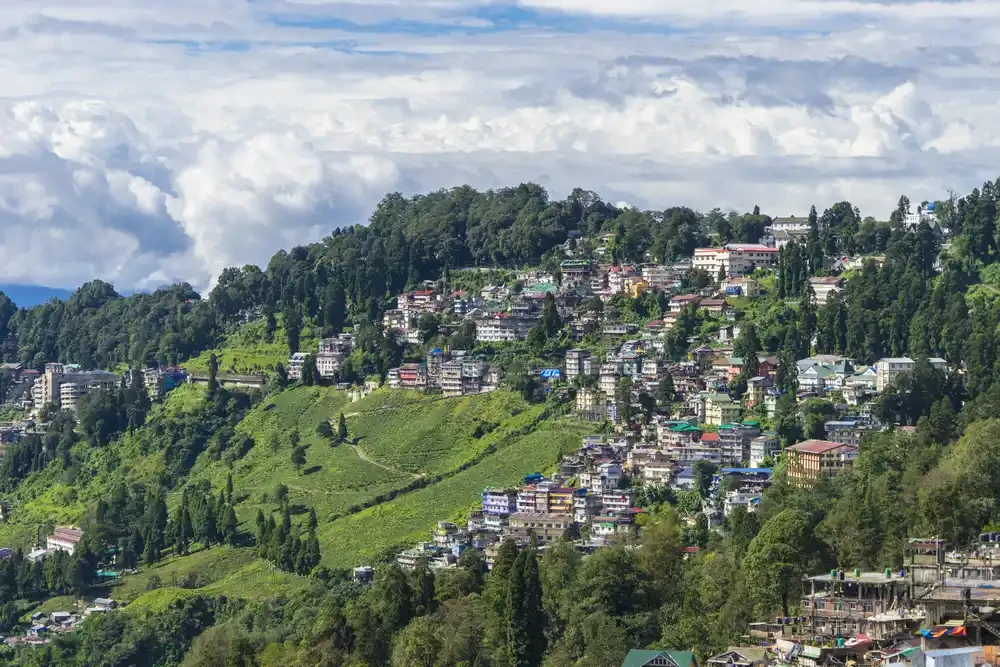
Nestled in the Darjeeling district of West Bengal, Bagdogra is often seen as the gateway to North-East India and the mighty Himalayas. Though modest in size, this scenic town is surrounded by sprawling tea gardens that paint the landscape in shades of green. These estates produce the world-famous Darjeeling tea, filling the air with a refreshing, earthy aroma that defines the region.
Every tea estate in Bagdogra carries a legacy shaped by time. Castleton Tea Estate reflects colonial charm through its heritage bungalow and time-worn pathways. Ambootia Tea Estate, set against dense rhododendron groves, offers tranquil tea-tasting experiences with sweeping views of distant mountain ranges. Margaret’s Hope Tea Estate stands out with its poignant folklore, stories of love, loss, and resilience steeped into every cup of tea produced here.
Bagdogra plays a crucial role for travellers heading towards the higher Himalayas and Sikkim. It serves as the primary base for trekkers, mountaineers, and adventure seekers. Popular trekking routes to Darjeeling, Sandakphu, and Phalut originate here. The renowned Singalila Ridge Trek takes explorers through vibrant rhododendron forests, offering breathtaking views of some of the world’s tallest peaks and unforgettable nights beneath star-lit skies.
For mountaineering enthusiasts, Bagdogra marks the starting point for expeditions towards the majestic Kangchenjunga, the third-highest mountain on Earth.
Flowing gently alongside the town, the Mahananda River adds a sense of calm to Bagdogra’s landscape. Its riverbanks provide peaceful settings for nature walks and relaxed picnics. Adventure lovers can venture into the nearby Mahananda Wildlife Sanctuary, where dense forests hide leopards, barking deer, and a wide variety of birdlife. A jungle safari here promises both thrill and close encounters with nature.
One of Bagdogra’s iconic landmarks is the Coronation Bridge, locally known as Sevoke Bridge. Stretching across the Teesta River, it links the districts of Darjeeling and Kalimpong. Built in 1937 to commemorate the coronation of King George VI and Queen Elizabeth, the bridge is affectionately called “Baghpool” by locals, inspired by the striking tiger statues guarding one end.
With its mist-covered tea gardens, sweeping mountain views, flowing rivers, and historic landmarks, Bagdogra offers a harmonious blend of serenity and adventure. Whether you’re enjoying a freshly brewed cup of Darjeeling tea or soaking in Himalayan panoramas, this understated town leaves a lasting impression. Bagdogra is not merely a stopover; it’s a journey filled with moments worth remembering.
How to Reach Bagdogra from Major Cities
Bagdogra is one of the most important entry points to North Bengal, Darjeeling, and Sikkim. Thanks to strong air, rail, and road connectivity, reaching this gateway town is simple and convenient for travellers from across India. Here are the main ways to get to Bagdogra.
Travelling by car allows flexibility and the opportunity to enjoy scenic views of tea gardens and foothills along the way.
Bagdogra Airport (IXB) is the quickest and most convenient option, especially for travellers arriving from distant cities. It serves as the main aviation hub for North Bengal, Darjeeling, and Sikkim.
Book tickets early using IRCTC, airline apps, or trusted bus portals to secure better prices.
Reach your boarding point at least an hour before departure to avoid last-minute stress.
Use prepaid taxis or app-based cabs from NJP or the airport for smooth transfers.
Travel light if you plan to use shared transport options.
Check weather and traffic updates, especially duringthe monsoon and winter months.
Keep emergency contacts and hotel details saved on your phone.
Always opt for prepaid or app-based taxis to avoid overcharging.
Carry bottled water and light snacks during long journeys.
Use official booking platforms for trains, flights, and buses.
Shared jeeps are economical for hill travel but can be crowded.
Secure your luggage and carry essentials in a small daypack.
Be cautious during monsoon landslides and winter fog conditions.
The most comfortable time to travel to Bagdogra is from March to May and October to November, when weather conditions are pleasant, and roads remain clear. Monsoon months (June to September) may bring heavy rainfall and delays, while winter mornings often experience dense fog affecting flights and road visibility.
Travelling during daylight hours and avoiding major festivals like Durga Puja or Christmas can help reduce congestion and high fares.
 Manali
 Kerala
 Kashmir
 Spiti Valley
 Dharamshala
 Shimla
 Ladakh
 Bir Billing
 Dalhousie
 Kasol
Kasol
 Tirthan & Jibhi
 Meghalaya
 Tawang
 Uttrakhand
 Sikkim
 Bhutan